
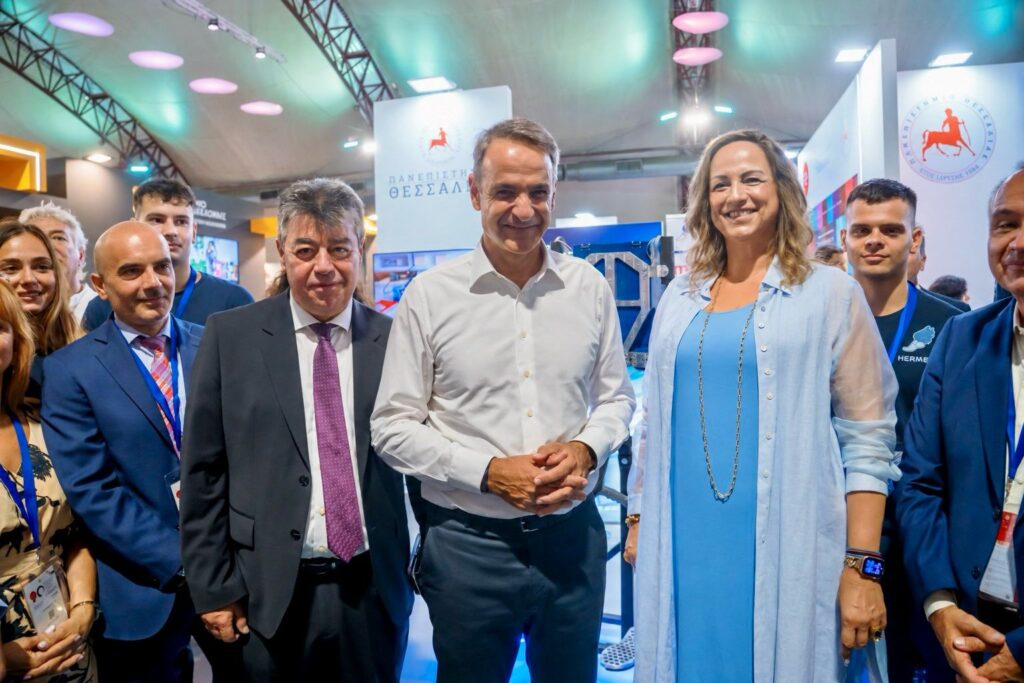
The 90th Thessaloniki International Fair, held from 5 to 13 September 2026, brought together universities, researchers, businesses, public institutions and students around some of the key questions shaping research, innovation and higher education in Greece.
The University of Thessaly was present throughout the Fair with research achievements, technological applications, student initiatives and a programme of discussions around research, innovation, technology transfer, agri-food and the future of higher education.
For Chrysi Laspidou, Vice Rector of Research, Innovation, Digital Governance and Lifelong Learning at the University of Thessaly, TIF was an opportunity to take part in several of these discussions and activities, with a common focus: how knowledge, technology and innovation can move beyond the university and create value in practice.
From research to real-world solutions
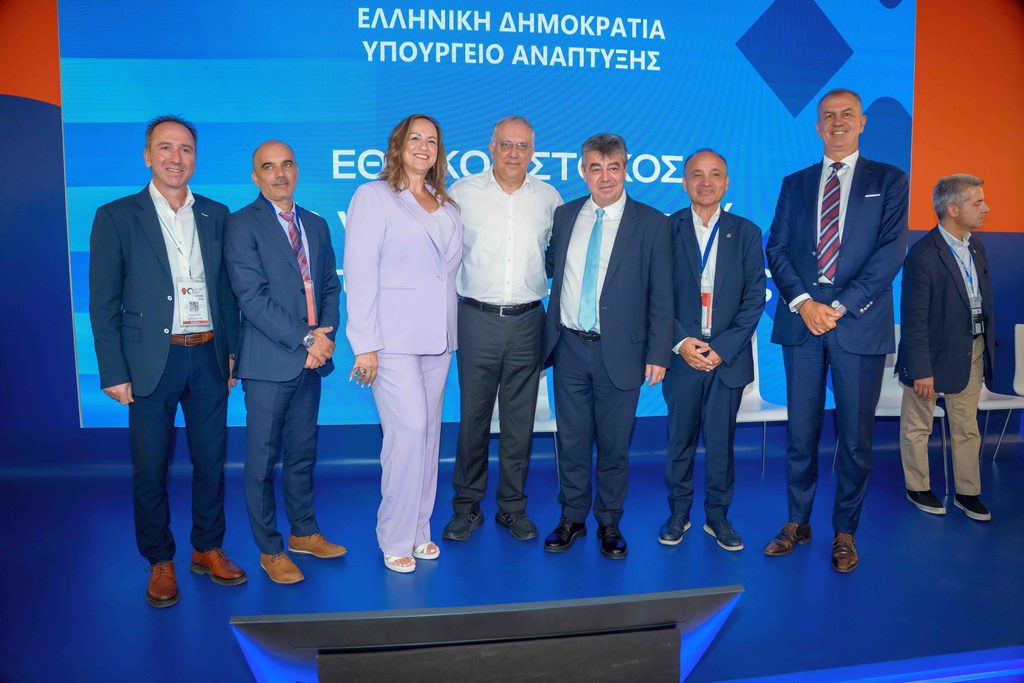
One of the highlights was the presentation of AGRILABS – Agricultural Living Labs at the Ministry of Development’s Pavilion.
During the workshop “Innovation in Agricultural Production: Living Labs, Technology and Sustainable Resource Management for the New Agri-Food Production Model”, Professor Laspidou joined Rector Professor Charalambos Billinis, Professor Nikolaos Katsoulas and Professor Athanasios Korakis to discuss how research and technology can respond to the real needs of agricultural production.
AGRILABS focuses on creating the conditions for technologies to be tested and evaluated in real production environments. Researchers, producers, businesses and young scientists can work together in the field, in greenhouses and in livestock facilities, assessing what works, what can be adopted and what can create measurable value.
The technologies being explored include precision agriculture, digital tools, Artificial Intelligence, sensors, drones, automated monitoring and data-driven decision-making. Water and energy management are particularly important areas, especially for Thessaly, where agriculture is facing increasing pressure from climate and environmental challenges.
For Professor Laspidou, this connection between research and practice is central to the role of a modern university. Innovation should not stop at the laboratory or at the development of a new technology. It should reach the people and sectors that can use it.
A university connected to its region
This approach is part of a broader strategy at the University of Thessaly to strengthen the connections between research, production, entrepreneurship and society.
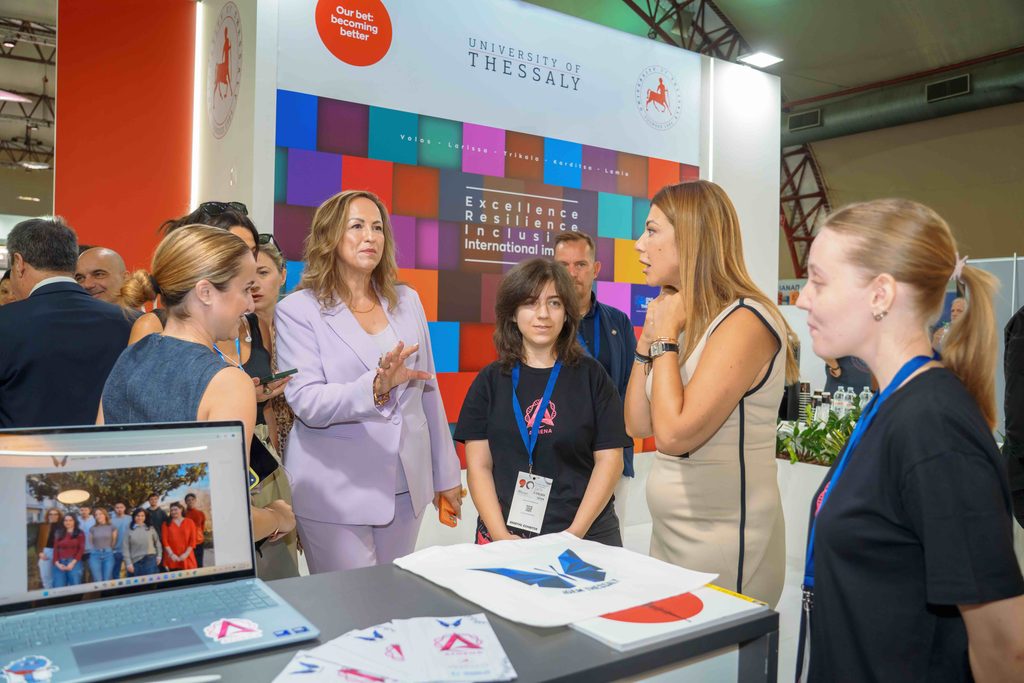
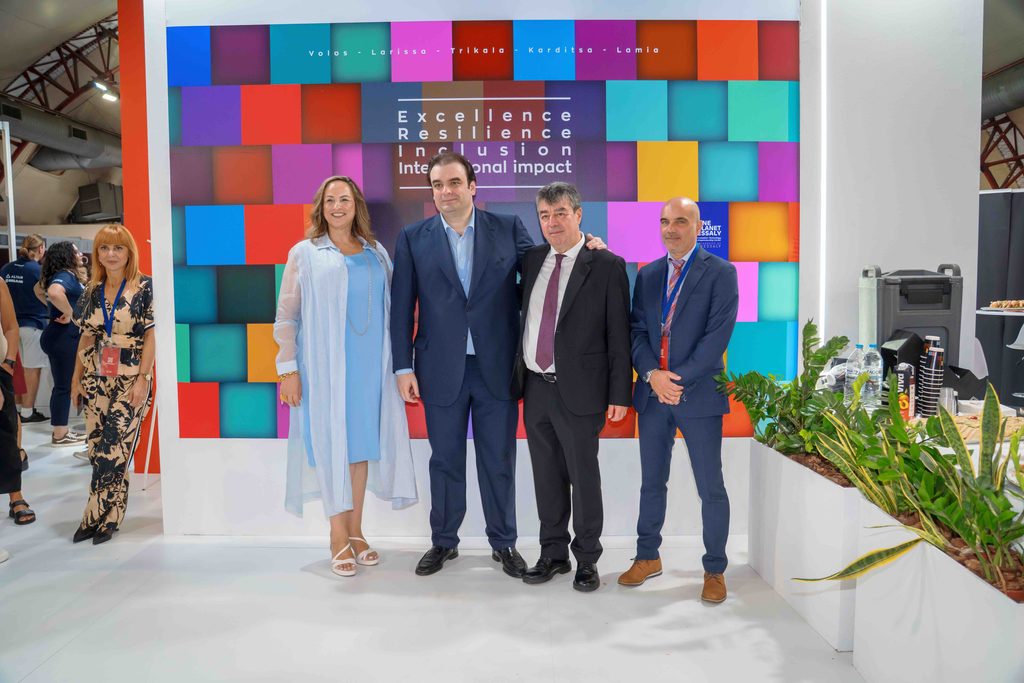
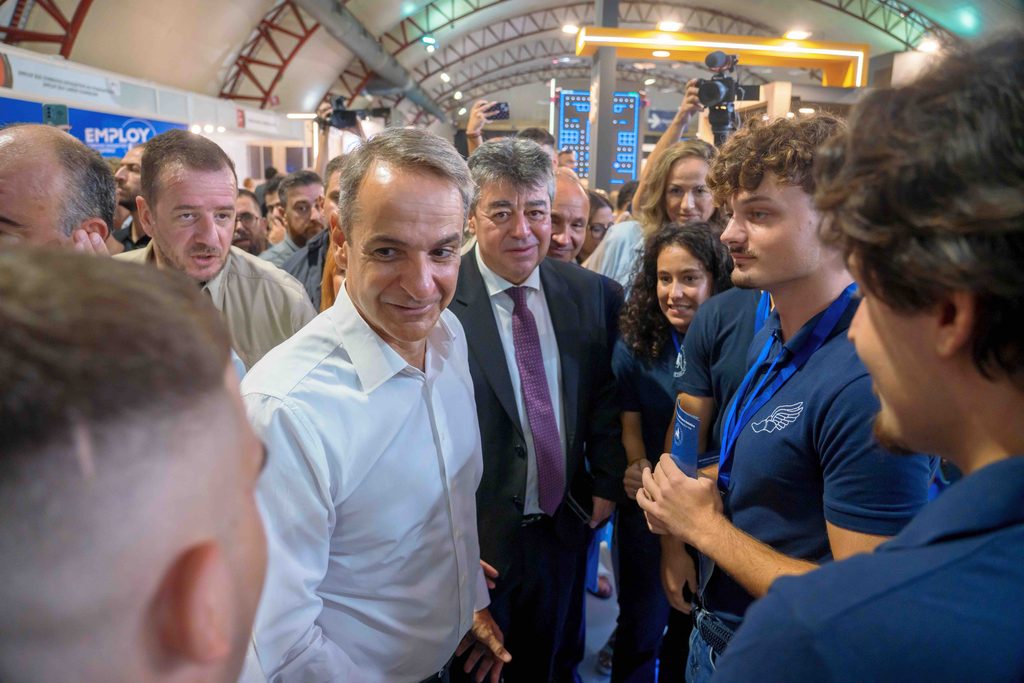
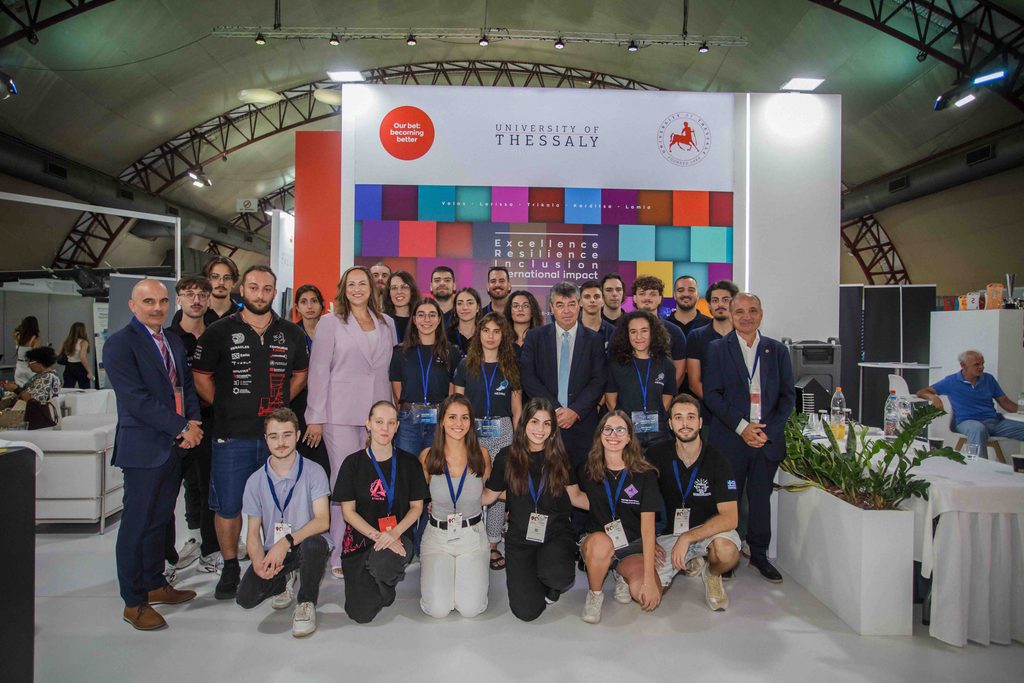
The University’s presence at Pavilion 17, Stand 32 reflected this approach. Through One Planet Thessaly, the University’s Innovation, Technology Transfer and Entrepreneurship Centre, visitors could explore research results, technological applications and initiatives developed across the university community.
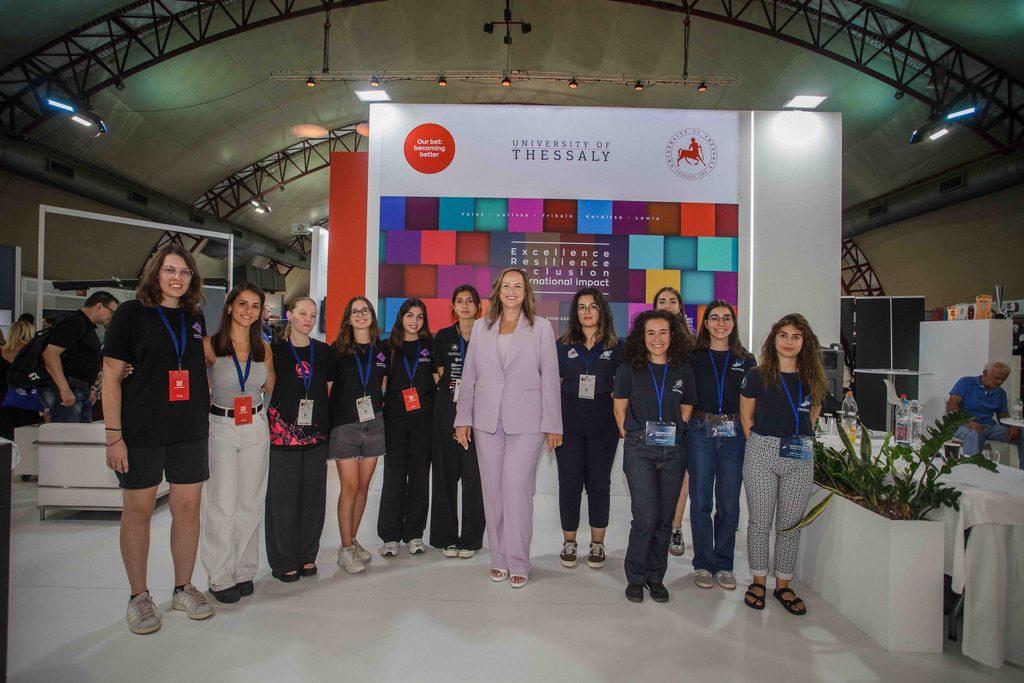
The stand also placed students at the centre of the University’s presence at TIF. The teams STARBOUND, HERMES, iGEM-Thessaly, WIE, RoboHeads and Centaurus presented their work and gave visitors a direct view of the ideas, technologies and projects being developed by students.
From robotics and Artificial Intelligence to space technology and agri-food, their participation showed the breadth of activity taking place across the University — and the importance of giving students opportunities to develop their ideas through research, technology and entrepreneurship.
The participation of young women across these teams was also particularly encouraging. Supporting greater participation by women in science, technology and innovation is an important part of building a research and innovation ecosystem that can draw on the full range of available talent and ideas.
From research to the market
Technology transfer was another important theme of Professor Laspidou’s programme at TIF.
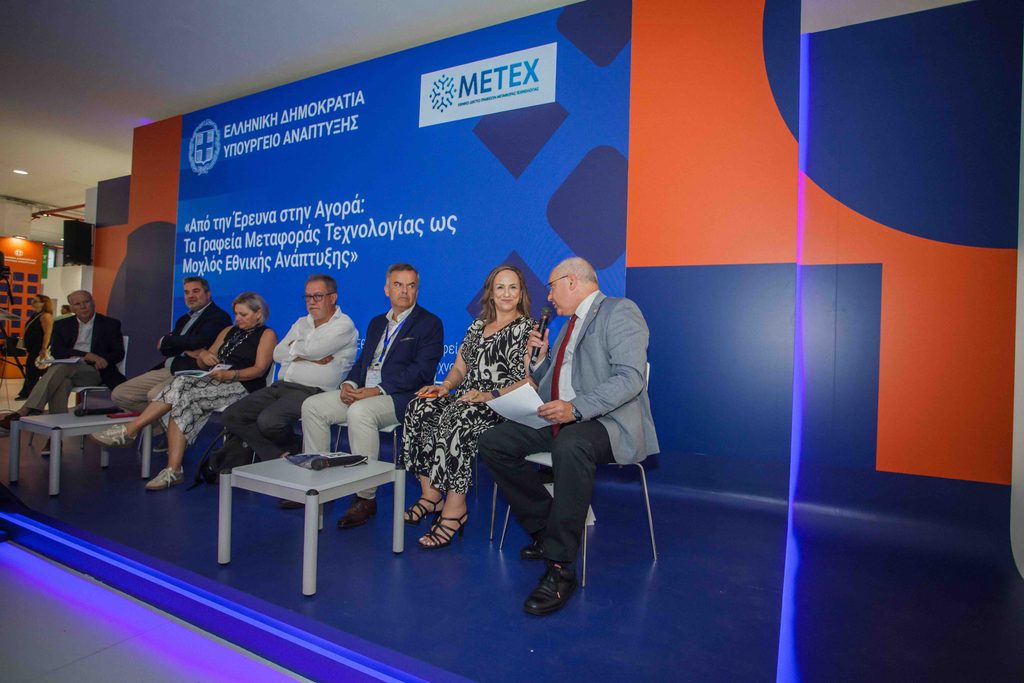
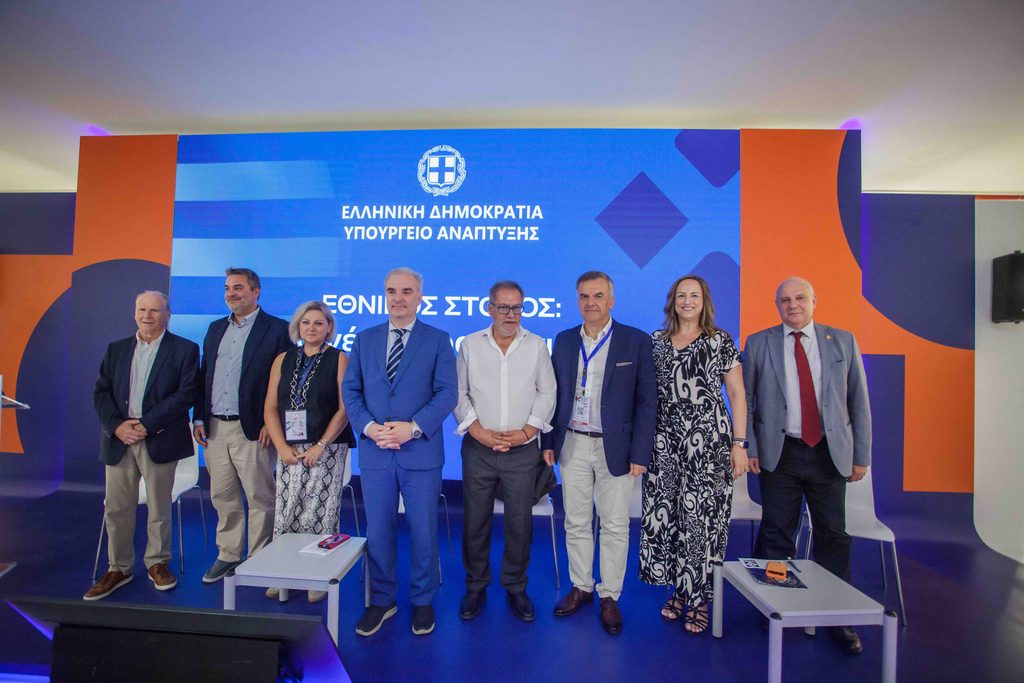
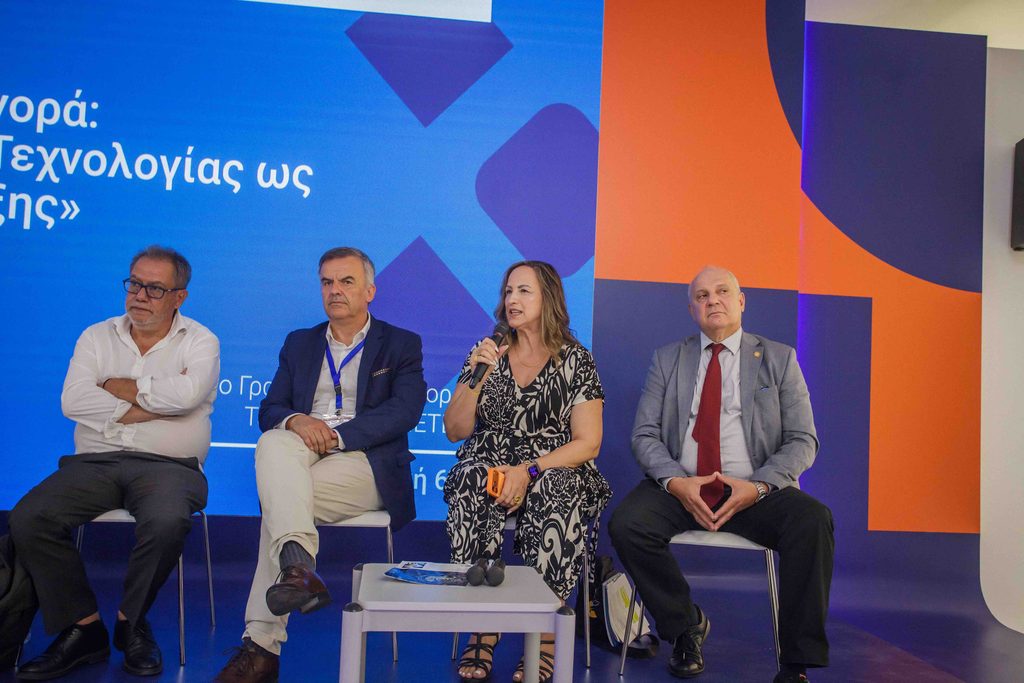
She participated in the METEX panel “From Research to Market: Technology Transfer Offices as a Driver of National Development”, bringing together representatives of the national Technology Transfer Networks to discuss how research results can move towards application and the market.
Technology Transfer Offices have an important role in this process. They can help researchers identify opportunities, build connections with businesses and other organisations, and develop pathways for research results to become technologies, collaborations, services and new ventures.
For universities, this requires more than producing research with potential. It also requires the structures, partnerships, skills and support needed to help that potential move forward.
This is an important part of the work of One Planet Thessaly, which connects research and innovation with technology transfer and entrepreneurship and aims to strengthen the links between the University and the wider economy.
Research, innovation and the future of higher education
The University of Thessaly’s presence at TIF also extended beyond research and technology.
Professor Laspidou took part in the programme alongside a wider university delegation, while Rector Professor Charalambos Billinis participated in discussions organised by the Hellenic Foundation for Research and Innovation (HFRI) and the European Commission’s Representation in Greece.
These events addressed broader questions around research funding, innovation, European university cooperation and the future of higher education.
For regional universities in particular, European collaboration can create new opportunities for international partnerships, mobility, research and innovation. The discussion around European University Alliances highlighted how these collaborations are reshaping the ways universities work together across borders.
Four priorities: Excellence, Innovation, Inclusion and Impact
Across its presence at the 90th TIF, the University of Thessaly highlighted four interconnected priorities: Excellence, Innovation, Inclusion and Impact.
These priorities were visible in different ways throughout the Fair — from competitive research projects and technological demonstrations to student initiatives and discussions about technology transfer and entrepreneurship.
For Professor Laspidou, these areas are closely connected. Excellence in research creates new knowledge. Innovation creates ways of applying it. Inclusion ensures that different people and perspectives can contribute. And impact is ultimately about what that knowledge and innovation can achieve beyond the university.
TIF provided an opportunity to bring these different dimensions together in one place.