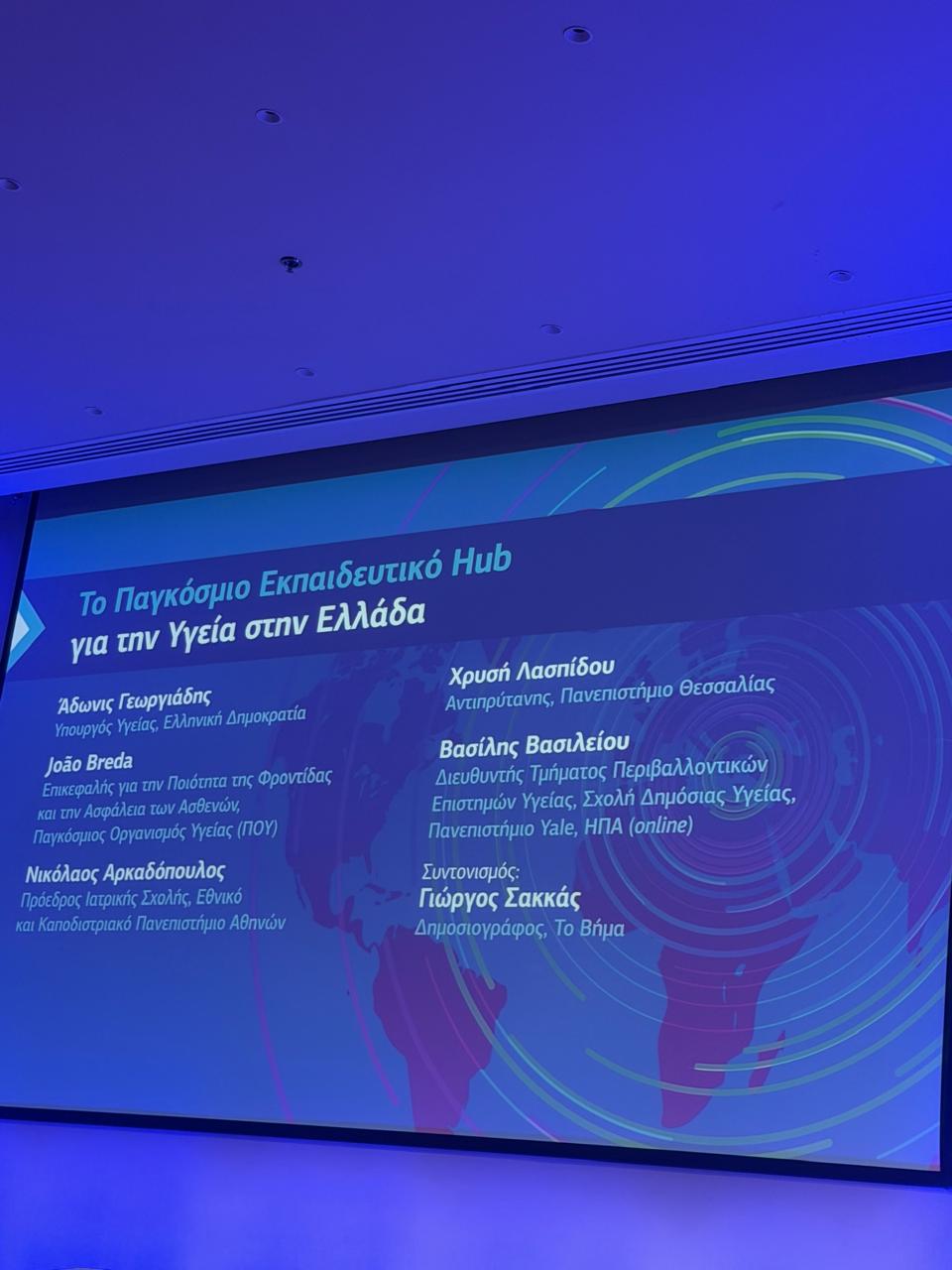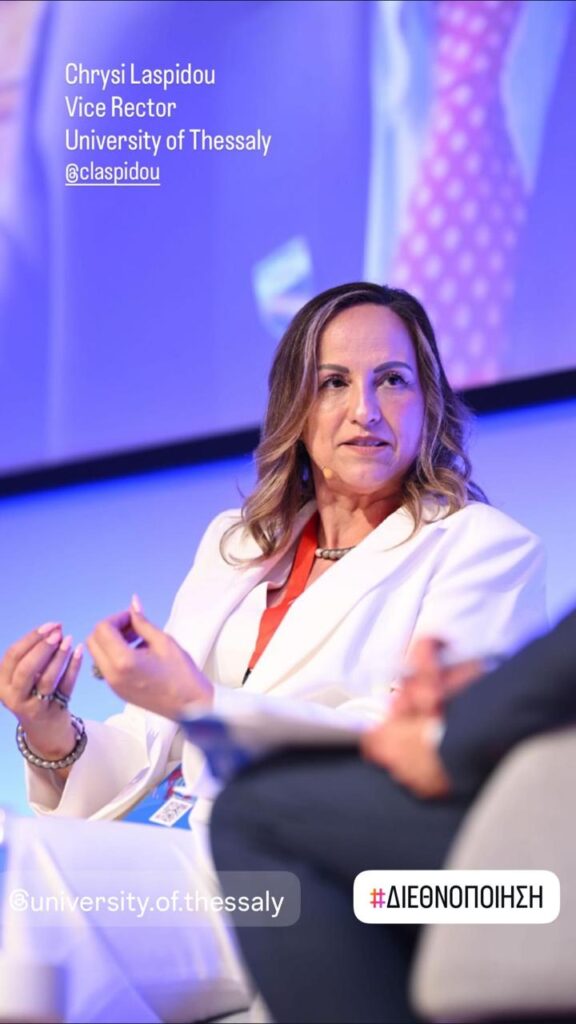
Yesterday, I participated in the event “The Global Educational Hub for Health in Greece”, held at the National Gallery in Athens. The discussion formed part of a broader initiative on the internationalisation and extroversion of Greek Higher Education.
The event brought together representatives from government, academia, and international organisations, including Adonis Georgiadis, Minister of Health of the Hellenic Republic, João Breda (WHO Office on Quality of Care and Patient Safety in Athens), Nikolaos Arkadopoulos (Dean of the School of Medicine, National and Kapodistrian University of Athens), and Vasilis Vasiliou (Yale School of Public Health, online participation). The discussion was moderated by George Sakkas (To Vima).
A key point of the discussion was that internationalisation is becoming a central strategic direction for higher education systems.
The focus is not limited to mobility programmes or joint degrees, but extends to strengthening the international presence of universities through academic collaboration, research networks, and increased openness to global engagement.The role of international students and English-taught programmes was also highlighted as an important factor in enhancing the international profile of universities and supporting broader academic exchange.
The discussion also emphasised the importance of deeper integration of universities into international academic and research networks. This includes strengthening collaborations and enhancing the visibility and engagement of institutions within the global higher education landscape.
From our work at the University of Thessaly and through One Planet Thessaly, this direction is closely aligned with our mission to strengthen the link between research, innovation, entrepreneurship, and societal impact. The Innovation and Technology Transfer Unit and Entrepreneurship Center (One Planet Thessaly) focuses on supporting the protection and promotion of research results, fostering collaboration between the University and industry, and enhancing the entrepreneurial and innovation capacity of the academic community.
Within this framework, internationalisation is closely connected to the ability of universities to expand their impact and engagement beyond national boundaries, reinforcing the link between academic research and societal application.